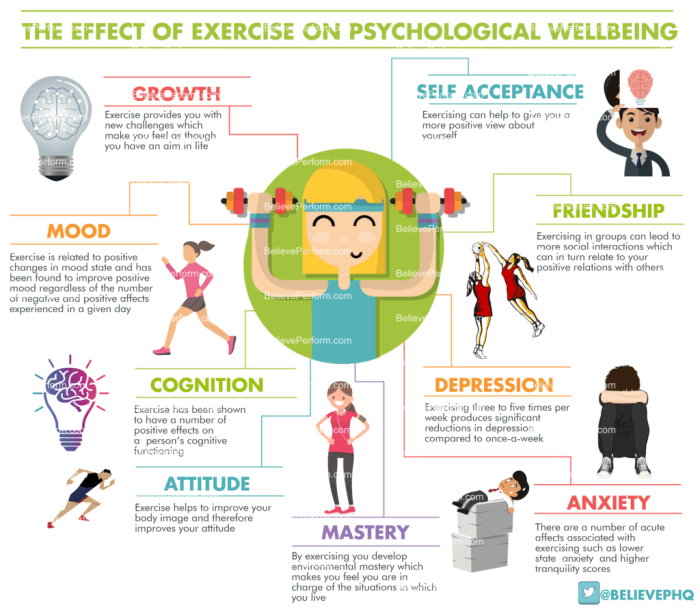
The impact of exercise on mental wellness and mood sets the stage for exploring how physical activity can significantly enhance our overall well-being. As we delve into this topic, we uncover the powerful connection between exercise and our emotional state, providing insights into the transformative effects of staying active.
From boosting cognitive function to managing stress levels, the benefits of regular exercise go beyond just physical health, offering a holistic approach to nurturing our mental wellness and mood.
Balanced Diet
Eating a balanced diet plays a crucial role in supporting mental wellness and mood. The nutrients we consume have a direct impact on our brain function and emotional well-being.
Nutrient-Rich Foods for Mental Health
A balanced diet rich in specific nutrients can positively impact mental health. Foods such as fatty fish (rich in omega-3 fatty acids), leafy greens (abundant in folate), nuts and seeds (sources of magnesium and zinc), and whole grains (providing B vitamins) are known to support brain health and mood regulation.
Contribution to Overall Well-being
A balanced diet not only nourishes the body but also contributes to emotional balance. Nutrient-dense foods provide the necessary building blocks for neurotransmitters, which are essential for regulating mood and emotions. By consuming a variety of fruits, vegetables, lean proteins, and whole grains, individuals can support their overall well-being and mental health.
Mental Wellness
Regular exercise has a profound impact on mental wellness, contributing to overall emotional well-being and cognitive function. Physical activity is closely linked to mood regulation, stress management, and enhanced mental clarity.
Benefits of Exercise on Mood Regulation and Stress Management
Regular physical activity is known to release endorphins, often referred to as “feel-good” hormones, which can help elevate mood and reduce feelings of stress and anxiety. Exercise also promotes better sleep patterns, which play a crucial role in managing stress levels.
By engaging in activities such as running, swimming, or yoga, individuals can experience a significant improvement in their emotional state and overall mental health.
Improvement in Cognitive Function and Emotional Well-being
In addition to boosting mood and reducing stress, regular exercise has been shown to enhance cognitive function and emotional well-being. Physical activity stimulates the production of brain-derived neurotrophic factor (BDNF), a protein that supports the growth and maintenance of neurons in the brain.
This process can lead to improved memory, focus, and overall cognitive performance. Moreover, engaging in exercise can help individuals build resilience against mental health conditions such as depression and anxiety.
Physical Fitness
Regular physical activity plays a crucial role in maintaining good mental health. The relationship between physical fitness and mental wellness is significant, as exercise can have a positive impact on mood and overall well-being. Engaging in physical activities can help reduce symptoms of anxiety and depression, boost self-esteem, and promote a positive mindset.
Benefits of Staying Active for Mental Wellness
- Improves mood: Exercise stimulates the release of endorphins, also known as “feel-good” hormones, which can help reduce feelings of stress and anxiety.
- Boosts self-esteem: Achieving fitness goals and feeling stronger physically can enhance self-confidence and self-esteem.
- Enhances cognitive function: Regular exercise has been linked to improved cognitive function and can help with focus and concentration.
- Reduces symptoms of depression: Physical activity can act as a natural antidepressant, helping to alleviate symptoms of depression.
Examples of Beneficial Exercises for Mental Wellness
- Cardiovascular exercises: Running, cycling, or swimming can help increase heart rate and improve circulation, leading to a boost in mood and energy levels.
- Yoga: Practicing yoga can help reduce stress, improve mindfulness, and promote relaxation, all beneficial for mental health.
- Strength training: Lifting weights or bodyweight exercises can not only improve physical strength but also boost confidence and self-esteem.
- Dance: Dancing is a fun way to stay active, release tension, and improve coordination, all of which contribute to better mental well-being.
Adequate Hydration
Maintaining adequate hydration is crucial for overall mental health and well-being. Dehydration can have a significant negative impact on mood, cognitive function, and overall energy levels.
Importance of Hydration for Mental Health
Dehydration can lead to a decrease in cognitive performance and mood disturbances. Research has shown that even mild dehydration can impair various aspects of brain function, including concentration, alertness, and short-term memory. Staying hydrated is essential for maintaining optimal mental health and functioning.
Negative Effects of Dehydration on Mood and Cognitive Function
When the body is dehydrated, it can affect neurotransmitter function, leading to mood swings, irritability, and even anxiety. Dehydration can also impair cognitive abilities such as memory, attention, and decision-making. It is important to drink enough water throughout the day to prevent these negative effects on mood and cognitive function.
Connection between Hydration, Energy Levels, and Well-being
Proper hydration is closely linked to energy levels and overall well-being. Dehydration can cause fatigue, lethargy, and a decrease in physical and mental performance. By staying hydrated, you can boost your energy levels, enhance your mood, and support your overall well-being.
Remember to drink an adequate amount of water daily to maintain optimal hydration levels for improved mental wellness.
Regular Exercise
Regular exercise plays a crucial role in improving mental wellness and mood. The benefits of physical activity on emotional well-being are significant, leading to enhanced overall quality of life.
Incorporating Physical Activity into Daily Routines
Incorporating physical activity into daily routines can be easier than you think. Simple changes like taking the stairs instead of the elevator, going for a walk during breaks, or engaging in a quick workout session before or after work can make a difference in your mood.
Setting specific exercise goals and scheduling workout sessions in advance can also help you stay committed to regular physical activity.
Long-term Benefits of Consistent Exercise on Emotional Balance
Consistent exercise not only boosts mood in the short term but also has long-term benefits on emotional balance. Regular physical activity helps reduce symptoms of anxiety and depression, improves sleep quality, and enhances self-esteem. Over time, exercise can become a coping mechanism for stress and a way to maintain emotional well-being.
The release of endorphins during exercise promotes a sense of well-being and positivity, contributing to emotional resilience and stability.
Healthy Lifestyle: The Impact Of Exercise On Mental Wellness And Mood
Adopting a healthy lifestyle is crucial for supporting mental health. It involves a combination of balanced diet, regular exercise, adequate hydration, and mental wellness practices. When these components are integrated into daily routines, they contribute to overall well-being and positively impact mental health.
Holistic Approach to Well-being
A healthy lifestyle promotes a holistic approach to well-being by addressing physical, mental, and emotional health. By maintaining a balanced diet, engaging in regular exercise, managing stress effectively, and prioritizing self-care, individuals can enhance their overall quality of life. This holistic approach recognizes the interconnectedness of physical, mental, and emotional well-being, emphasizing the importance of taking care of all aspects of health.
Interplay Between Physical, Mental, and Emotional Health
Physical health, mental health, and emotional health are closely intertwined in a healthy lifestyle. Regular exercise not only improves physical fitness but also boosts mood and reduces symptoms of anxiety and depression. Eating a nutrient-rich diet not only nourishes the body but also supports cognitive function and emotional well-being.
Adequate hydration is essential for overall health, including mental clarity and emotional stability. By nurturing all three aspects of health, individuals can achieve a balanced and fulfilling lifestyle.
Nutrient-Rich
The importance of consuming a diet rich in nutrients cannot be overstated when it comes to mental wellness. Nutrient-rich foods provide the essential vitamins, minerals, and antioxidants that support brain function and mood regulation.
Key Nutrients for Mood Regulation
- Omega-3 fatty acids: Found in fatty fish, flaxseeds, and walnuts, omega-3s are crucial for brain health and can help reduce symptoms of depression.
- Vitamin D: Sunlight exposure and fortified foods can provide this vitamin, which is linked to improved mood and cognitive function.
- Magnesium: Nuts, seeds, and leafy greens are good sources of magnesium, which plays a role in serotonin production and stress management.
- B vitamins: Whole grains, lean meats, and leafy greens contain B vitamins that are essential for energy production and mood regulation.
Impact on Cognitive Function and Emotional Balance
Eating a diet rich in nutrients can have a profound impact on cognitive function and emotional balance. Nutrient-dense foods provide the fuel necessary for optimal brain function, helping to improve focus, memory, and overall mental clarity. Additionally, consuming a variety of nutrients supports emotional balance by regulating neurotransmitters and hormones that influence mood.
Stress Management
Exercise plays a crucial role in managing stress levels and promoting overall mental well-being. When we engage in physical activity, our body releases endorphins, also known as “feel-good” hormones, which help reduce feelings of stress and anxiety.
Relationship between Physical Activity and Stress Reduction
Regular exercise has been shown to lower the body’s stress hormones, such as cortisol, while simultaneously increasing the production of endorphins. This dual effect helps in combating stress and improving mood. Whether it’s going for a brisk walk, practicing yoga, or hitting the gym, any form of physical activity can significantly reduce stress levels.
- Exercise helps in distracting the mind from daily worries and negative thoughts, allowing for a mental break and a shift in focus.
- Physical activity promotes better sleep quality, which is essential for stress management and overall well-being.
- Engaging in exercise can boost self-confidence and provide a sense of accomplishment, which in turn reduces stress levels.
Incorporating Stress Management Strategies into Daily Routines
It’s important to find physical activities that you enjoy and can easily incorporate into your daily routine.
- Start small by incorporating short bursts of physical activity throughout the day, such as taking the stairs instead of the elevator or going for a quick walk during breaks.
- Practice mindfulness exercises, such as deep breathing and meditation, to help relax the mind and reduce stress levels.
- Set realistic goals for exercise and prioritize self-care to ensure that stress management becomes a regular part of your routine.
Preventive Care
Regular exercise and healthy habits play a crucial role in preventive care for mental health. By adopting a proactive approach towards mental well-being, individuals can significantly reduce the risk of developing mental health issues.
Regular Exercise
Regular physical activity, such as aerobic exercise, has been shown to have a positive impact on mental health by reducing symptoms of anxiety and depression. Exercise helps release endorphins, which are known as the “feel-good” hormones, promoting a sense of well-being and overall mood improvement.
Healthy Habits
Incorporating healthy habits into daily routines, such as maintaining a balanced diet, getting adequate sleep, and practicing stress management techniques, can also contribute to preventive care for mental health. A nutrient-rich diet and proper hydration support brain function and emotional well-being, while sufficient rest allows the mind to recharge and recover from daily stressors.
Early Intervention
Early intervention and proactive measures are essential components of preventive care for mental well-being. Seeking professional help at the first signs of mental health issues can prevent symptoms from worsening and improve overall outcomes. By addressing concerns early on, individuals can effectively manage their mental health and maintain a healthy lifestyle.
Proper Nutrition
Proper nutrition plays a crucial role in maintaining mental wellness. The food we consume directly impacts our brain health and emotional well-being, influencing our mood and cognitive function.
Foods that Support Brain Health
A diet rich in nutrients such as omega-3 fatty acids, antioxidants, vitamins, and minerals can support brain health. Foods like fatty fish (salmon, mackerel), nuts and seeds, fruits (berries, oranges), vegetables (leafy greens, broccoli), and whole grains are excellent choices to nourish the brain.
Enhancing Mood and Cognitive Function
A well-balanced diet that includes a variety of nutrient-rich foods can enhance mood and cognitive function. Consuming complex carbohydrates (whole grains, legumes), lean proteins (chicken, tofu), healthy fats (avocado, olive oil), and plenty of fruits and vegetables can provide the necessary nutrients for optimal brain function.
Importance of Hydration
Staying adequately hydrated is also essential for mental wellness. Dehydration can negatively impact mood, concentration, and overall cognitive performance. Drinking enough water throughout the day is crucial for maintaining optimal brain function and emotional well-being.
Quality Sleep
Quality sleep plays a crucial role in mental wellness and overall well-being. Adequate rest is essential for maintaining emotional balance, cognitive function, and mood regulation.
Connection between Quality Sleep and Mental Wellness, The impact of exercise on mental wellness and mood
Quality sleep is directly linked to mental wellness as it allows the brain to recharge and repair itself. During deep sleep, the body goes through processes that are vital for memory consolidation, emotional processing, and stress regulation. Lack of quality sleep can lead to cognitive impairment, mood swings, and increased risk of mental health disorders.
Impact of Adequate Sleep on Mood Regulation and Emotional Balance
- Improved Emotional Resilience: Quality sleep helps regulate emotions and improves the ability to cope with stress and daily challenges.
- Enhanced Mood Stability: Adequate rest contributes to better mood regulation and reduces the risk of mood disorders such as depression and anxiety.
- Optimal Cognitive Function: Quality sleep supports cognitive function, including decision-making, problem-solving, and emotional intelligence.
Tips for Improving Sleep Quality
- Establish a Consistent Sleep Schedule: Go to bed and wake up at the same time every day, even on weekends.
- Create a Relaxing Bedtime Routine: Engage in calming activities before bed, such as reading, meditating, or taking a warm bath.
- Create a Comfortable Sleep Environment: Keep your bedroom dark, quiet, and at a comfortable temperature to promote quality sleep.
- Avoid Stimulants Before Bed: Limit caffeine and electronic devices before bedtime to support a restful night’s sleep.
- Exercise Regularly: Physical activity during the day can improve sleep quality and promote relaxation at night.
Cardio Health
Regular cardiovascular exercise plays a crucial role in maintaining not only physical health but also mental well-being. The relationship between cardiovascular health and mental wellness is significant, as exercise has been shown to have a positive impact on mood and cognitive function.
Benefits of Cardio Exercises for Mental Wellness
Cardio exercises, such as running, cycling, swimming, and dancing, can help improve mood by releasing endorphins, also known as “feel-good” hormones. These exercises stimulate blood flow to the brain, promoting the growth of new brain cells and improving cognitive function.
In addition, cardio activities can reduce stress and anxiety levels, leading to a better overall sense of well-being.
- Running: Running is a popular cardio exercise that can help boost mood and reduce symptoms of depression. It also improves cardiovascular health and overall fitness.
- Cycling: Cycling is a low-impact exercise that is gentle on the joints while providing great cardiovascular benefits. It can be a fun and effective way to improve mental wellness.
- Swimming: Swimming is a full-body workout that can help reduce stress and anxiety levels. The rhythmic movements and deep breathing involved in swimming can have a calming effect on the mind.
- Dancing: Dancing is not only a fun and social activity but also a great cardio workout. It can help improve mood, increase energy levels, and boost self-confidence.
Immune Boost
Regular exercise has been shown to have a positive impact on the immune system, helping to boost its overall function and effectiveness. This not only contributes to physical health but also plays a crucial role in mental wellness.
Link between Immune Health and Overall Well-being
A strong immune system is closely linked to overall well-being, as it helps the body fight off infections and illnesses more effectively. When the immune system is functioning optimally, it can reduce the risk of various health issues, leading to a better quality of life.
- Regular exercise can enhance the immune system by promoting good circulation, which allows immune cells to move more efficiently throughout the body.
- Exercise also helps to reduce inflammation in the body, which can contribute to a stronger immune response.
- Physical activity has been shown to increase the production of antibodies and white blood cells, which are essential for fighting off infections.
Benefits of Strong Immune System on Mood and Emotional Balance
A strong immune system not only protects the body from external threats but also has a positive impact on mood and emotional balance. When the immune system is functioning well, it can help reduce stress and anxiety, leading to improved mental well-being.
Research has shown that individuals with a strong immune system are less likely to experience mood disorders such as depression and anxiety.
- By reducing the risk of illness and infections, a strong immune system can help prevent disruptions in daily routines and activities, leading to a more stable emotional state.
- Improved immune function can also contribute to better sleep quality, which is crucial for overall mood regulation and emotional well-being.
- Individuals with a strong immune system may experience increased energy levels and a more positive outlook on life, enhancing emotional balance.
Positive Mindset
Regular exercise plays a crucial role in cultivating a positive mindset. Physical activity has a direct impact on our brain chemistry, releasing endorphins that are known as “feel-good” hormones. These chemicals help reduce feelings of stress and anxiety while promoting a sense of well-being.
Influence on Attitudes and Outlook
Regular physical activity can greatly influence our attitudes and outlook on life. By engaging in exercise, individuals often experience increased self-confidence, improved self-esteem, and a more optimistic view of the world. The sense of accomplishment that comes with setting and achieving fitness goals can translate into a more positive mindset overall.
- Exercise helps reduce symptoms of depression and anxiety, boosting mood and overall mental health.
- Physical activity promotes better sleep patterns, which are essential for maintaining a positive outlook.
- Regular exercise can enhance cognitive function and memory, leading to sharper mental focus and clarity.
Strategies for Maintaining a Positive Mindset
To maintain a positive mindset through regular exercise, it is important to find activities that you enjoy and can commit to on a consistent basis. Setting realistic fitness goals and tracking your progress can provide a sense of accomplishment and motivation.
Additionally, incorporating mindfulness practices such as yoga or meditation into your exercise routine can further enhance the benefits for your mental well-being.
Remember, exercise is not just about physical fitness, but also about nurturing a positive mindset and emotional well-being.
Clean Eating
When it comes to mental wellness, clean eating plays a crucial role in maintaining emotional balance and cognitive function. Clean eating refers to consuming whole, minimally processed foods that are rich in nutrients and free from artificial additives.
Examples of Clean Eating Habits
- Include plenty of fruits and vegetables in your daily diet to provide essential vitamins and minerals that support brain health and mood regulation.
- Opt for lean protein sources like chicken, fish, tofu, and legumes to help stabilize blood sugar levels and promote a steady supply of energy to the brain.
- Choose whole grains such as quinoa, brown rice, and oats over refined grains to maintain stable blood sugar levels and support cognitive function.
- Incorporate healthy fats from sources like avocado, nuts, seeds, and olive oil to support brain health and improve mood regulation.
- Avoid processed foods, sugary drinks, and excessive caffeine, as these can lead to energy crashes and negatively impact mood and cognitive function.
Impact of a Clean Diet on Mood Regulation and Cognitive Function
A diet rich in nutrient-dense, whole foods can have a significant impact on mood regulation and cognitive function. Nutrients like omega-3 fatty acids, antioxidants, vitamins, and minerals found in clean foods help reduce inflammation, support neurotransmitter function, and protect brain cells from oxidative stress.
Daily Activity
Regular physical activity plays a crucial role in improving mental health and overall well-being. Engaging in daily movement can have a positive impact on mood and cognitive function, helping to reduce stress and anxiety levels.
Benefits of Daily Physical Activity on Mental Health
- Improves mood: Exercise stimulates the production of endorphins, also known as “feel-good” hormones, which can help alleviate symptoms of depression and anxiety.
- Enhances cognitive function: Physical activity has been shown to improve memory, focus, and overall brain health, leading to better mental clarity and productivity.
- Reduces stress: Regular exercise can help lower cortisol levels, the stress hormone, and promote a sense of relaxation and well-being.
- Boosts self-esteem: Achieving fitness goals and feeling stronger physically can boost self-confidence and self-image, leading to improved mental health.
Tips for Incorporating Daily Movement
- Schedule it in: Set aside dedicated time each day for physical activity, whether it’s a morning workout, lunchtime walk, or evening yoga session.
- Find activities you enjoy: Choose exercises that you find fun and engaging to make daily movement a sustainable habit.
- Make it social: Exercise with a friend or join group classes to stay motivated and accountable.
- Stay consistent: Aim for at least 30 minutes of moderate-intensity exercise each day to reap the mental health benefits of daily physical activity.
Importance of Consistent Activity for Overall Well-being
- Long-term benefits: Regular physical activity not only improves mental health in the short term but also reduces the risk of chronic diseases and promotes longevity.
- Maintains healthy weight: Daily movement helps burn calories, build muscle, and support metabolic health, contributing to overall well-being.
- Enhances quality of life: Being active each day can improve energy levels, sleep quality, and overall sense of vitality, leading to a higher quality of life.
- Promotes holistic wellness: Combining daily physical activity with a balanced diet, adequate hydration, and stress management practices can create a foundation for a healthy and fulfilling lifestyle.
Holistic Health
In today’s fast-paced world, the concept of holistic health has gained significant attention as people seek a more comprehensive approach to overall well-being. When it comes to mental wellness and mood regulation, the holistic approach focuses on treating the individual as a whole, considering the interconnectedness of physical, mental, and emotional health.
Interconnectedness of Physical, Mental, and Emotional Well-being
The holistic approach emphasizes that the mind, body, and spirit are interconnected and influence one another. Physical health, mental well-being, and emotional balance are all integral parts of holistic health. When one aspect is out of balance, it can affect the others, leading to overall health issues.
- Physical Health: Regular exercise, balanced diet, and adequate hydration are essential for physical well-being. These practices not only improve physical health but also have a positive impact on mental wellness and mood regulation.
- Mental Well-being: Stress management, quality sleep, and a positive mindset are crucial for mental wellness. Practices such as mindfulness meditation and relaxation techniques can help improve mental health and overall mood.
- Emotional Balance: Maintaining healthy relationships, engaging in activities that bring joy, and seeking support when needed are key components of emotional well-being. Emotional balance plays a significant role in overall holistic health.
Holistic Health Practices for a Balanced Lifestyle
Holistic health practices encompass a wide range of activities and habits that contribute to a balanced and healthy lifestyle. These practices focus on nurturing the mind, body, and spirit to achieve overall well-being.
“Holistic health is about treating the whole person, not just the symptoms.”
- Healthy Eating: Consuming nutrient-rich foods that nourish the body and mind is essential for holistic health. A balanced diet provides the necessary nutrients to support overall well-being.
- Physical Activity: Engaging in regular exercise and daily physical activity not only improves physical health but also boosts mental wellness and mood. Exercise releases endorphins, the feel-good hormones that promote a positive outlook.
- Mindfulness Practices: Mindfulness meditation, yoga, and deep breathing exercises help reduce stress, improve focus, and enhance emotional well-being. These practices promote a sense of calm and inner peace.
Mindful Living
Living mindfully involves being fully present in the moment, paying attention to thoughts and feelings without judgment. This practice can have a profound impact on mental wellness by reducing stress, improving focus, and enhancing emotional balance.
Benefits of Mindfulness
- Reduces stress and anxiety: Mindfulness helps individuals become more aware of their thoughts and emotions, allowing them to respond to situations in a calmer, more rational manner.
- Improves mood and emotional balance: By practicing mindfulness, individuals can learn to regulate their emotions and cultivate a more positive outlook on life.
- Enhances focus and concentration: Mindfulness techniques, such as meditation, can sharpen attention and improve cognitive function, leading to increased productivity and mental clarity.
Incorporating Mindfulness into Daily Routine
- Start the day with a mindful activity, such as deep breathing or meditation, to set a positive tone for the day ahead.
- Practice mindful eating by savoring each bite, paying attention to flavors and textures, and eating slowly to fully enjoy the experience.
- Take short mindfulness breaks throughout the day to check in with yourself, focusing on your breath and body sensations to stay present and grounded.
- End the day with a gratitude practice, reflecting on moments of joy and appreciation to cultivate a sense of contentment and fulfillment.
Emotional Balance
Emotional balance is crucial for overall mental health as it involves managing and regulating one’s emotions effectively. When individuals achieve emotional balance, they are better equipped to handle stress, maintain healthy relationships, and cope with life’s challenges in a positive way.Exercise and healthy habits play a significant role in promoting emotional well-being.
Physical activity releases endorphins, which are known as the “feel-good” hormones that can help reduce feelings of anxiety and depression. Additionally, maintaining a balanced diet, staying hydrated, getting enough sleep, and practicing stress management techniques all contribute to emotional stability.
Strategies for Achieving Emotional Balance
- Practice mindfulness and meditation to help stay present and manage emotions effectively.
- Engage in regular exercise to boost mood and reduce symptoms of anxiety and depression.
- Establish a support system of friends and family to provide emotional support during challenging times.
- Set boundaries and learn to say no to activities or situations that may cause emotional distress.
- Seek professional help or therapy if needed to address underlying emotional issues and develop healthy coping mechanisms.
Health Education
Health education plays a crucial role in promoting mental wellness by providing individuals with the necessary knowledge and skills to understand and manage their mental health effectively. By educating individuals on mental health concepts and practices, they can better recognize signs of mental health issues, seek appropriate help, and implement strategies to maintain their well-being.
The Importance of Understanding Mental Health Concepts and Practices
Health education empowers individuals to recognize the importance of mental health and the impact it has on overall well-being. Understanding mental health concepts such as stress management, emotional balance, and the benefits of a positive mindset can help individuals make informed decisions about their mental wellness.
By learning about mental health practices like mindfulness, healthy lifestyle choices, and preventive care, individuals can take proactive steps to improve and maintain their mental well-being.
Resources for Educating on Mental Well-Being
- Online platforms: Websites like the National Institute of Mental Health (NIMH) and the Mental Health Foundation offer valuable resources, articles, and tools for individuals seeking to educate themselves on mental well-being.
- Books and publications: Reading books authored by mental health professionals and experts in the field can provide in-depth knowledge on various mental health topics and strategies for improving mental wellness.
- Workshops and seminars: Attending workshops and seminars conducted by mental health professionals can offer practical guidance and interactive learning experiences for individuals interested in enhancing their mental well-being.
- Counseling and therapy: Seeking guidance from mental health professionals through counseling and therapy sessions can provide personalized support and education on managing mental health challenges.
Self-Care
Self-care is a crucial aspect of maintaining good mental health. It involves taking deliberate actions to prioritize your well-being and meet your own needs.
Significance of Self-Care for Mental Health
Self-care plays a significant role in promoting mental wellness by allowing individuals to recharge, reduce stress, and improve their overall emotional well-being. Taking time for oneself can help in preventing burnout, enhancing self-esteem, and fostering a positive outlook on life.
Self-Care Practices for Emotional Well-Being
- Engage in activities you enjoy: Whether it’s reading a book, going for a walk, or practicing a hobby, doing things that bring you joy can uplift your mood and reduce stress.
- Practice mindfulness and relaxation techniques: Mindfulness meditation, deep breathing exercises, and yoga can help calm the mind and improve emotional balance.
- Set boundaries: Learn to say no to things that drain your energy or cause unnecessary stress. Setting boundaries can protect your mental health and prevent overwhelm.
- Prioritize sleep: Getting an adequate amount of quality sleep is essential for mental well-being. Establish a bedtime routine and create a restful sleep environment.
- Connect with others: Building supportive relationships and seeking social connections can boost your mood and provide emotional support during challenging times.
Chronic Disease
Regular exercise plays a crucial role in preventing chronic diseases by improving overall health and reducing the risk of developing various conditions. Physical activity is a key component of a healthy lifestyle that can have a significant impact on managing and preventing chronic illnesses.
Impact of Regular Exercise on Preventing Chronic Diseases
Regular physical activity has been shown to reduce the risk of developing chronic conditions such as heart disease, type 2 diabetes, and certain types of cancer. Exercise helps maintain a healthy weight, control blood sugar levels, improve cardiovascular health, and strengthen the immune system.
By incorporating regular exercise into daily routines, individuals can significantly lower their risk of chronic diseases and enhance overall well-being.
Examples of Chronic Diseases Managed or Prevented Through a Healthy Lifestyle
- Heart Disease: Engaging in regular exercise, such as aerobic activities like running or cycling, can improve heart health, lower blood pressure, and reduce the risk of heart-related issues.
- Type 2 Diabetes: Physical activity plays a key role in managing and preventing type 2 diabetes by helping the body utilize insulin more effectively, control blood sugar levels, and maintain a healthy weight.
- Cancer: While not all types of cancer can be prevented through lifestyle choices, regular exercise and a healthy diet can lower the risk of certain cancers, such as breast and colon cancer.
Last Point
In conclusion, the profound impact of exercise on mental wellness and mood highlights the importance of incorporating physical activity into our daily lives. By embracing a lifestyle that prioritizes movement and fitness, we pave the way for a healthier mind and a happier heart.
FAQ Guide
How often should I exercise to see improvements in my mental wellness?
Consistency is key. Aim for at least 150 minutes of moderate-intensity exercise per week to experience positive changes in your mood and overall well-being.
Can any form of physical activity help in managing stress?
Absolutely. Whether it’s yoga, running, or dancing, engaging in any form of exercise that you enjoy can effectively reduce stress levels and boost your mental resilience.
Is there a specific time of day that’s best for exercising to improve mood?
While the ideal time can vary from person to person, many find that morning workouts provide an energizing start to the day and set a positive tone for the hours ahead.
Are there any exercises that are particularly beneficial for enhancing emotional well-being?
Activities like yoga, Pilates, and swimming are known for their calming effects on the mind and can greatly contribute to improving emotional balance and mental clarity.